Henry II and Thomas Becket
⚔️ Background: King and Chancellor
Henry II became King of England in 1154. He was a strong ruler who wanted to bring more order and control to the kingdom. One of his most trusted friends and advisors was Thomas Becket, who he appointed as Chancellor of England. As Chancellor, Becket was loyal to Henry, helping him strengthen royal authority and collect taxes, even from the Church.
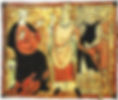
Henry trusted Becket so much that in 1162, when the position of Archbishop of Canterbury became vacant, he appointed Becket. Henry thought this was a clever move — with Becket in charge of the Church in England, the king could gain more influence over it.
✝️ From Friendship to Conflict
Once Becket became Archbishop, everything changed. Instead of supporting Henry’s control over the Church, Becket felt his first duty was now to God and the Pope. He turned from loyal servant to defender of Church independence.

The main clash came over legal power: Henry wanted the right to put clergy (priests, monks, bishops) on trial in royal courts if they broke the law. Becket argued that only the Church courts had authority over clergy.
In 1164, Henry issued the Constitutions of Clarendon, a set of rules aimed at limiting the Church’s power and bringing it under royal control. Becket refused to accept them.
🏃 Becket in Exile and Return
The quarrel escalated so badly that Becket fled to France,1164, where he lived in exile for several years, gaining the support of the Pope. While abroad, he continued to challenge Henry by excommunicating some of the king’s allies.

Excommunication was a powerful weapon — it meant being cut off from the Church, which frightened nobles and weakened Henry’s position.
In 1170, Becket finally returned to England after reaching a fragile peace with Henry. But the old tensions quickly flared up again when Becket continued to punish Henry’s supporters in the Church.


🩸 Murder in the Cathedral
Henry grew furious with Becket’s defiance. According to chroniclers, he shouted in frustration something like: “Will no one rid me of this troublesome priest?” Four of Henry’s knights took his words literally. They rode to Canterbury Cathedral and, on 29 December 1170, brutally murdered Becket in front of the altar.
🌟 Aftermath and Legacy
The murder shocked Europe. Instead of weakening the Church, Becket’s death made him a martyr — someone who died for their faith. Within just three years, in 1173, he was canonised (made a saint) by the Pope.
Pilgrims from across Europe travelled to Canterbury to visit Becket’s shrine, and his reputation as a holy man grew.
For Henry II, the murder was a disaster. He had to show public penance (shame and sorrow), including being whipped by monks at Canterbury, to make peace with the Church.
🏛️ Long-Term Impact
The Becket affair showed that the Church could not easily be controlled by kings. The conflict between Church and State continued for centuries, but Becket’s martyrdom gave the Church greater moral authority in the short term. It also made clear to rulers that the Pope’s influence in England was still powerful.
Top Tips & Timeline
📜 Friends to enemies: Henry and Becket started as close allies, but loyalty to the Church split them apart.
📜 Key issue: The fight was about who had more power — the King’s courts or the Church’s courts.
📜 Constitutions of Clarendon (1164): Henry’s attempt to control the Church, firmly resisted by Becket.
📜 Exile and return: Becket fled to France, but came back in 1170 and clashed with Henry again.
📜 Murdered in Canterbury Cathedral (1170): Four knights killed Becket, making him a martyr.
📜 Canonised in 1173: Becket became a saint, and pilgrims visited his shrine at Canterbury.
📜 Impact: His death strengthened the Church’s moral power and forced Henry to humble himself.

Mini Dictionary: The Hundred Years’ War
Succession – The process of deciding who should be the next king or queen.
Heir – The person who is next in line to the throne.
Dynasty – A family of rulers who keep passing the crown down through generations.
Monarch – A king or queen who rules a country.
Archbishop – The highest-ranking bishop in a region of the Church. Thomas Becket was the Archbishop of Canterbury.
Clergy – People who work in the Church, like priests and bishops.
Coronation – The ceremony where someone becomes king or queen.
Excommunication – When someone is officially banned from taking part in Church services and sacraments.
Henry II – King of England from 1154 to 1189. He had many laws and wanted control over the Church.
Martyr – Someone who dies for their beliefs. Thomas Becket is remembered as a martyr.
Pope – The leader of the Catholic Church.
Saint – A person recognized by the Church for their holy life. Thomas Becket became a saint after his death.
Trial of Clergy – A law Henry II wanted: the idea that clergy (churchmen) should be tried in royal courts instead of Church courts.